Attracting new customers no longer relies only on signage or flyers: Instagram food creators have become decisive relays to get an address discovered, make a community salivate and fill a dining room within a few days.
This guide demystifies influencer marketing applied to restaurants: price benchmarks, types of collaboration, key contract points and a method to measure ROI. The goal: choose the right food influencer and launch your first campaign with confidence.
Working with a Food Influencer: The Complete Guide (Pricing, Contract, ROI)
Reading time: ~12 min
1. Why work with a food influencer?
2. How to choose the right influencer?
3. How much does a partnership cost?
4. Contract, legal framework and best practices
5. Measure and optimise ROI
6. Mini FAQ
Why work with a food influencer?
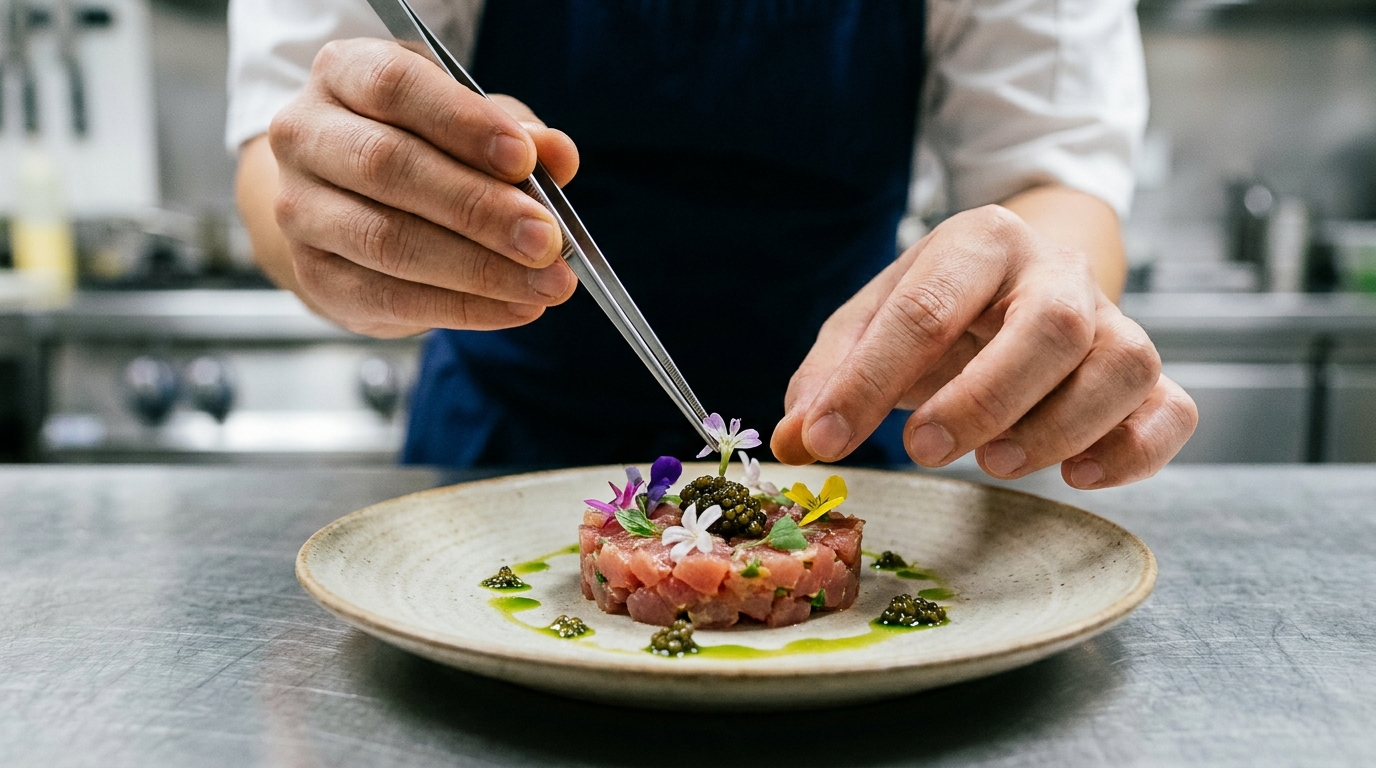
What a food influencer can bring to your restaurant
They can:
• introduce new addresses to a highly targeted audience;
• reassure through credibility that is seen as more authentic than traditional advertising;
• generate immediate traffic when a post or story goes live.
For a neighbourhood restaurant, a local creator reaches thousands of people a few metro stops away. For a niche concept (vegan, Asian street food…), a specialised influencer puts you in touch with a community that is already curious.
• Invitation to a full meal in exchange for content
• Photo post or carousel mentioning your restaurant
• Stories with a first reaction and the atmosphere
• Reels showing behind the scenes, preparation or tasting
When food influence becomes more profitable than traditional advertising
Influencer platforms find that a campaign with creators often costs 2 to 10 times less than an Instagram or YouTube ad for equivalent engagement. For a local business, the direct impact shows in the number of covers, the average ticket and the visit frequency of regulars.
How to choose the right influencer?
Clarify your goals first
Key questions: Do you mainly want to gain local awareness? Fill a new service (Monday evening)? Launch a new menu? Boost bookings over a specific period? Your answers determine the profile to target.
Criteria to evaluate a food influencer
1. Editorial line: bistronomy, Neapolitan pizza, burgers, healthy, brunch, pastry, vegan… Choose a creator whose universe fits your concept.
2. Location of the community: check that their followers are actually in your city or region.
3. Engagement rate: ratio of likes, comments and views, and the quality of the exchanges. A micro-influencer with 15,000 very active followers can outperform an account with 150,000 barely engaged followers.
4. Professionalism: punctuality, respect for the brief, transparency on rates and previous collaborations. Do not hesitate to ask for a media kit.
Micro or macro influencer?
Nano (< 5,000), micro (5,000 to 30,000), mid-tier (30,000 to 100,000) or macro (> 100,000). For a physical restaurant, the local micro influencer often offers the best budget-to-results trade-off. Bigger profiles suit you if you aim for national awareness or manage several venues.
How much does a partnership cost?
Food nano influencer
Fewer than 5,000 followers: a meal invitation, rarely paid or only a small symbolic sum.
Food micro influencer
5,000 to 30,000 followers: invitation + moderate payment, varying with the number of pieces of content.
Food mid-tier influencer
30,000 to 100,000 followers: a bigger budget including a feed post, stories and sometimes a video.
Culinary macro influencer
Beyond 100,000 followers: amounts that can reach several thousand euros per post.
A post for 50,000 followers is often billed at a few hundred euros; a series of stories (~10,000 views) falls in the same range. Rates depend on the number of pieces of content, the display duration, reuse rights and any exclusivity clauses.
Contract, legal framework and best practices
Essential clauses
To specify: Objectives, deliverables (posts, stories, reels), schedule, payment (fee + meal), mandatory mentions (“advertising”), content usage rights and post-campaign reporting. A written agreement protects both parties and avoids misunderstandings.
Legal framework and transparency in France
The commercial influence law requires clear disclosure of any compensation (invitation, payment, product). Beyond a certain amount, a written contract becomes mandatory. Also check the influencer’s legal status and their ability to issue an invoice.
Measure and optimise ROI
The right indicators to track
Impressions, views, new followers.
Increase in bookings, online menu views, calls.
Example of a mini campaign
Fill Tuesday evenings and launch a tapas menu.
A local micro creator (~20,000 followers).
A meal for two plus payment in exchange for one reel, two live stories and a reminder.
Mini FAQ
Do you always have to pay an influencer? Not necessarily. For small local accounts, the invitation can be enough. As soon as there are several pieces of content or image reuse, financial payment makes sense.
How do you find relevant influencers? Search through your city and cuisine hashtags, look at accounts that already recommend nearby places, or go through a specialised agency.
What are the main risks? Misaligned values, disappointing content quality or lack of transparency. A clear brief, a simple contract and open communication limit these risks.
How long before you see the effect on revenue? The impact of a one-off collaboration is often seen in the days following publication. For lasting awareness, work regularly with the same creator or a small complementary group.
Working with a food influencer is neither reserved for big chains nor out of reach financially. With clear goals, a consistent selection and a well-drafted contract, a simple invitation can become a powerful visibility lever. To make the most of this traffic, offer a smooth experience with an always up-to-date digital menu. Discover our digital menu solutions for restaurants and build them into your influence strategy.