


A menu that stays the same all year follows neither the rhythm of your guests nor that of your food costs. Seasonal menu engineering lets you steer your menu through the seasons based on concrete data rather than intuition.
By analysing the performance of your seasonal dishes, you know exactly what to keep, what to improve and what to remove. You build more profitable menus, better aligned with guest expectations, while limiting waste and complexity in the kitchen.
How to Adapt Your Menu Engineering to the Seasons?
Reading time: ~10 min
1. Understanding seasonal menu engineering
2. Start from the data of past seasons
3. Analyse the performance of your seasonal dishes
4. Build your future menus with seasonal menu engineering
5. Checklist for a menu engineering cycle every season
6. Dos and don’ts in seasonal menu engineering
7. Mini FAQ on seasonal menu engineering
Understanding seasonal menu engineering
Menu engineering analyses each dish on two axes: profitability (contribution margin, food cost) and popularity (sales volume, share of orders). The method then sorts dishes into four families: stars, workhorses, puzzles and dogs, to decide whether to promote, optimise or remove them.
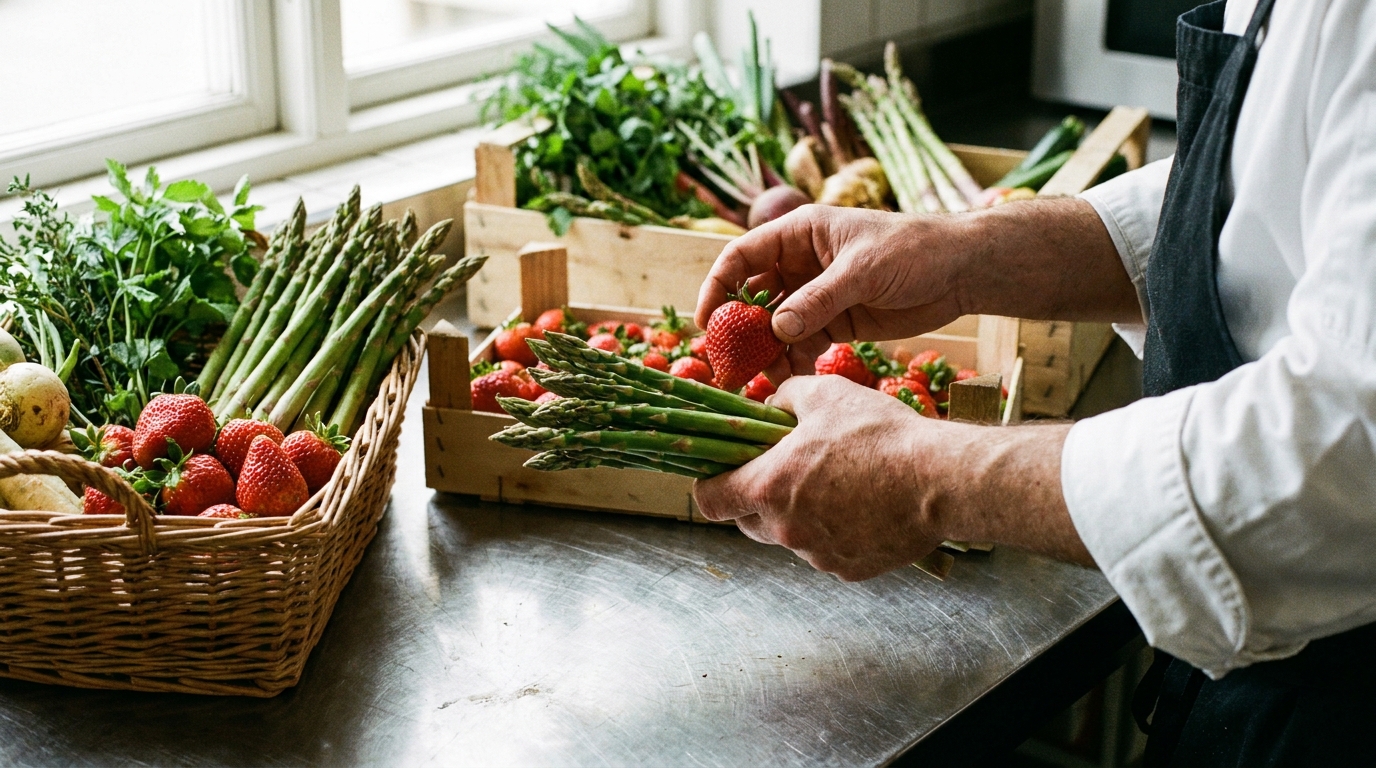
In its seasonal version, you apply the same logic over a specific period: spring, summer or festive menu. The benefit: taking into account variations in product costs and guest cravings linked to the weather, tourism or habits. A dish can be a star in summer and become a dog in winter; only seasonal analysis reveals these nuances.
Start from the data of past seasons
Start by using your history to turn your sales into a dashboard. For each past season, note the exact period (e.g. 1 June to 31 August), the actual list of dishes offered and the figures available: sales, revenue, food cost, unit and total margin, peak moments of service.
If you have a digital menu with analytics, add the viewing rate of each dish, those that are viewed a lot but rarely ordered, and the impact of visuals and descriptions. This data shows what attracts or holds back guests even before ordering.
Analyse the performance of your seasonal dishes
Popularity
Calculate each dish’s share of the season’s sales and compare it with the menu’s average popularity. Above: popular dish; below: not very popular.
Profitability
For each dish, note food cost, selling price, unit margin and total margin (unit margin × number of sales). A dish that sells little but is very profitable may deserve more visibility; the opposite can drag down your overall margin.
Complexity and operational impact
Beyond food cost, assess preparation time, the technicality of the recipe, the effect on service flow and the waste generated. A complex dish that is stressful in the kitchen or a source of losses must be simplified, even if it sells well.
Guest feedback and image
Complete your figures with online reviews, spontaneous feedback in the dining room and observations of partly eaten plates. A dish that is strong for your image can stay on the menu as a signature, provided you adjust the portion, price or garnish to recover the margin.
By combining these criteria, classify each dish as: a star to keep, a profitable dish to sell better, a popular but not very profitable dish to optimise, or a dish that sells little and earns little, to remove or transform.
Build your future menus with seasonal menu engineering
The goal is simple: use the analysis of the past season to design the next menu, rather than starting from a blank page.
First, carry over the stars of the previous season. They have proven their popularity and profitability; refresh them slightly if needed (seasonal product, plating, description).
Then work on the dishes with potential, those that are profitable but sell little or are popular but low in margin. Several levers exist: simplify the recipe, adjust the portion, change the side, renegotiate with your suppliers, or rework the name, description and photo on your menu.
Finally, remove the dogs, unless they play a strong image role for your venue.
To track these changes season after season, an analytics tool like the one offered by Appero spares you manual spreadsheets and reveals trends continuously.
Checklist for a menu engineering cycle every season
At each change of season: gather the previous data (sales, costs, margins, guest feedback, waste, complexity); classify dishes by popularity and profitability; decide on actions (keep, adapt, replace, test); design the new offer with available products and trends; take care of the presentation (names, descriptions, visuals); track indicators during the season; debrief at the end of the period with the dining room and the kitchen.
Dos and don’ts in seasonal menu engineering
Do
• Really work by season with clearly defined menus.
• Involve the teams (kitchen and dining room) from the design stage.
• Test new dishes as a dish of the day or limited offer before adding them.
• Adapt the offer to the weather and the tourist context.
• Use digital data: sales, views, combinations in a ticket.
Don’t
Copy and paste last year’s menu without checking costs and tastes.
Multiply dishes at the expense of readability and production.
Rely only on intuition or on the loudest feedback.
Change the menu mid-season without precise analysis.
Promise a revolution every season without enough resources.
Mini FAQ on seasonal menu engineering
How often should I analyse my seasonal dishes? At the end of each season, with a midpoint review. In summer or during the festive period, a quick monthly check is worthwhile if your data is centralised.
What if a seasonal dish is loved but not very profitable? First test a slight price rise, a more affordable garnish, an adjusted portion or work on the plating. If it stays unprofitable, keep it as an image item but control its exposure and compensate with higher-margin dishes.
How do I proceed if I lack data? From the next season, set up simple tracking (digital menu, manual records). Even with little hindsight, trends emerge quickly.
Does seasonal menu engineering make the menu unstable? No: the goal is to stabilise a base of signature dishes all year and to evolve a reasonable portion of the menu according to the seasonal analysis.
By adopting this approach, your menu becomes a real steering lever, attractive to guests and healthy for your margins. To go further, discover our support on Appero.