At a time when guests look for flexibility and discovery, your wine by the glass offer directly influences the average ticket and margin. Well designed, it can grow your sales by 20 to 30% while improving the guest experience. Conversely, a few mistakes in structure, pricing or service are enough to reduce profitability.
This guide, written from the operational angle of a sommelier, details how to review your range, your prices, your organisation and your team training to secure your margins every day.
How to Optimise Your Wine by the Glass Offer to Maximise Profits?
Reading time: ~15 min
1. Diagnose your current wine by the glass offer
2. Build a profitable and readable range
3. Build a pricing policy that secures margin
4. Control portions and reduce losses
5. Staging and team training
6. Mini FAQ
Diagnose your current wine by the glass offer
Indicators to track
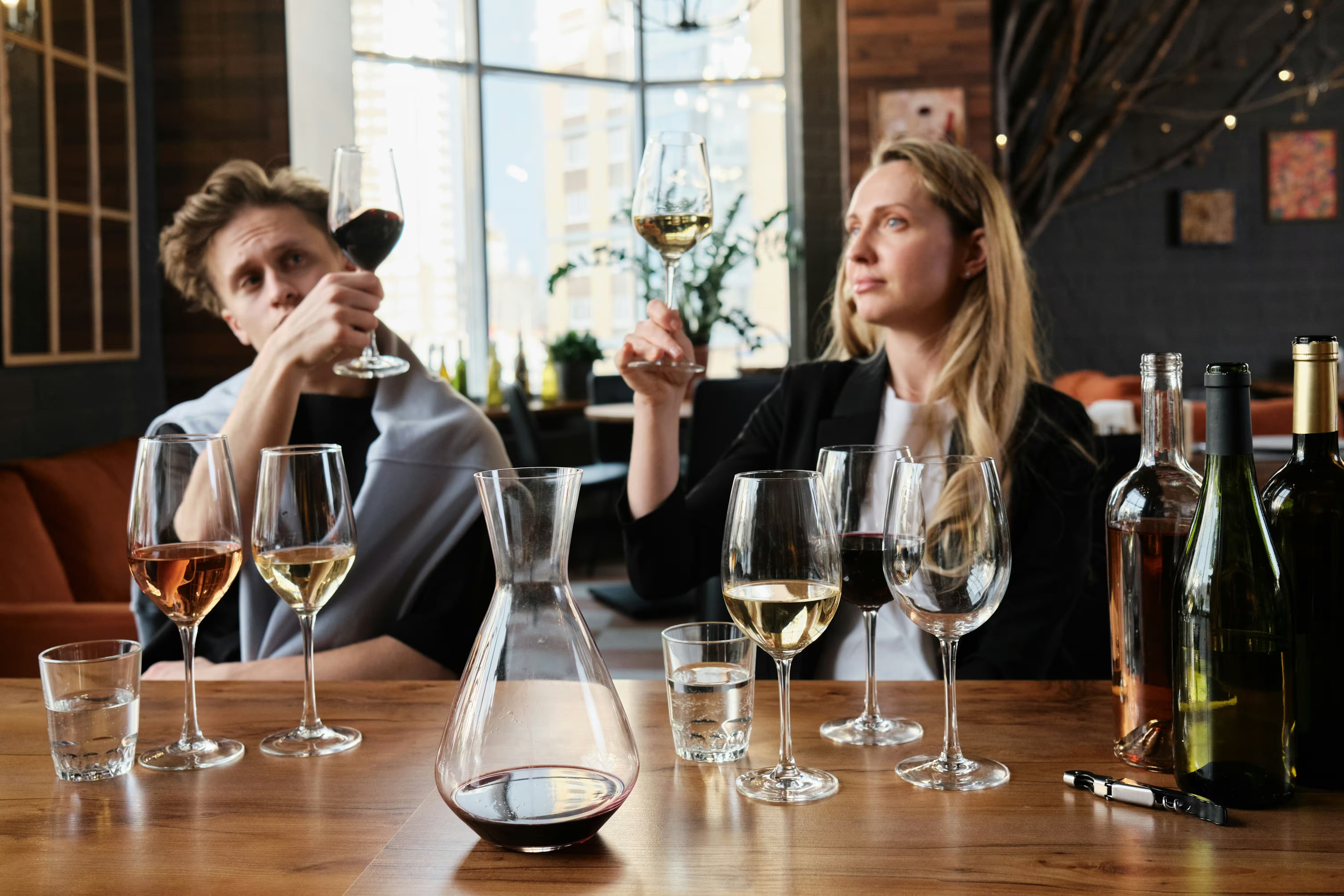
Track over a few weeks: the glass versus bottle sales rate, the rotation of each reference, the volume of losses (opened bottles thrown away), the average drinks ticket and the share of wine. This data, taken from a simple table or from your till software, reveals the wines that turn too slowly, those to offer by the glass as well, and the moments when the team forgets to suggest a glass.
• Key indicators: rotation, losses, average ticket, glass/bottle split
• Goal: have a reliable snapshot before any change
Build a profitable and readable range
Number of references and styles
Aim for 10 to 12 references: 3-4 whites, 3-4 reds, 1 rosé (seasonal) and 1-2 sparkling wines. Offer three price levels: an entry-level wine with high rotation, a mid-range wine at the heart of sales, and one or two premium wines for differentiation.
Serving sizes and service standards
The classic serving is 12-13 cl (6 glasses per bottle). Offer a half-glass of 6 cl for top-end wines or food and wine pairings, and reserve 15 cl for festive wines.
Adapt the offer to your positioning
Brasserie (ticket ≈ €15): a majority of affordable glasses. Bistronomic or fine dining: a wider price range, but keep a few accessible options.
Build a pricing policy that secures margin
Calculate the cost price
Purchase price excl. VAT + 10-20% losses, divided by the number of glasses. By the glass, the margin should be slightly higher than on the bottle; some professionals require the first glass to pay back the bottle for risky wines.
Coefficient benchmarks
Purchase price < €6: coefficient ~4; €6-12: ~3.5; €12-25: ~3; > €25: ~2.5. Adjust according to rotation and reputation.
Ranges by average ticket
€15 ticket: glasses at €4.50-7.50; €25 ticket: €7.50-12; fine dining €40+: €12-20, or more for exceptional wines.
Control portions and reduce losses
Standardise servings
Use marked glasses or pourers, train the team to visualise 6-9-12 cl and check regularly.
Preservation systems
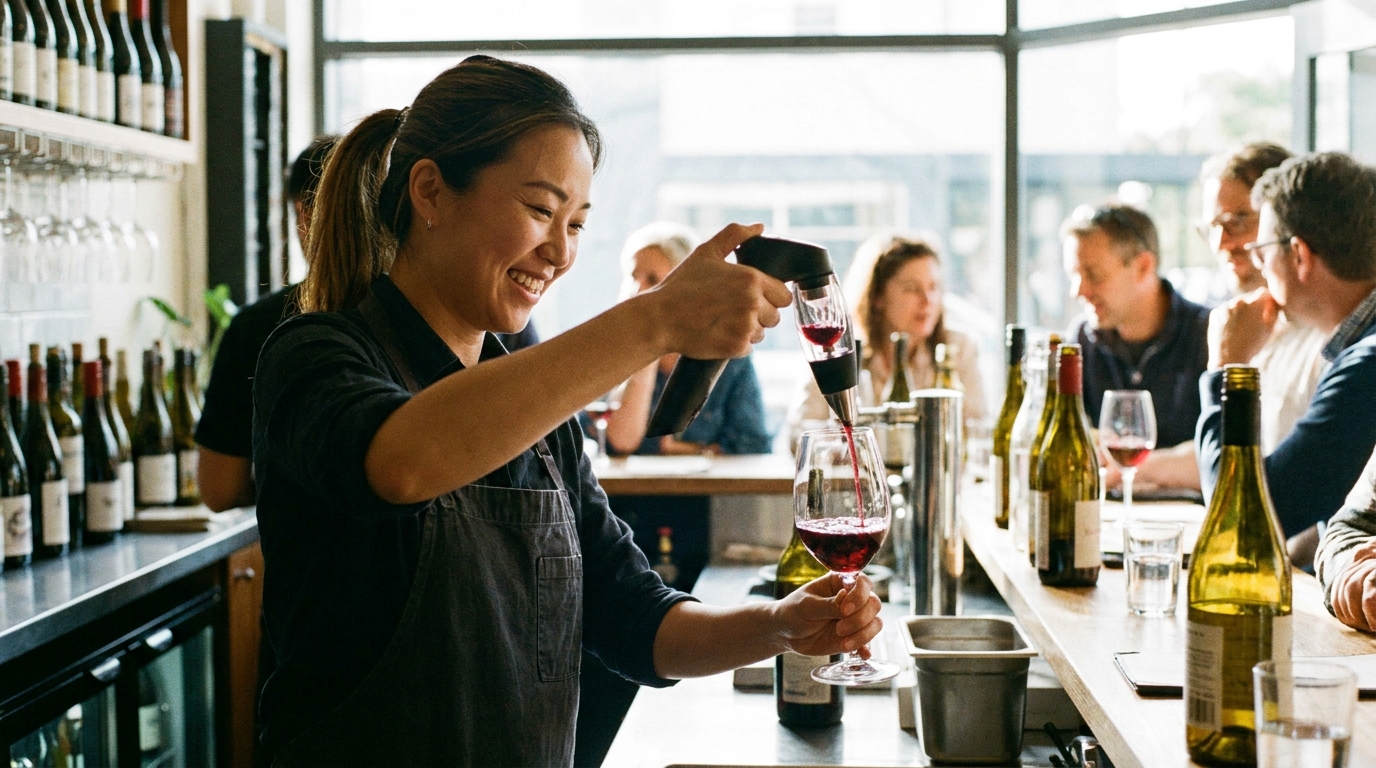
Vacuum pumps: inexpensive but short-term; inert gas: ideal for top-end wines; refrigerated dispensers: automatic dosing for 4-8 frequently served references. Include depreciation in the cost calculation.
Cellar organisation
Track rotation, reposition wines that stagnate and schedule bottle openings according to bookings to reduce leftovers.
Staging and team training
A clear and attractive menu
Sort wines by taste universe (fresh & indulgent / balanced / powerful) and by price tier. Mention grape variety, aromatic style and ideal pairing. A recommended pairing next to each dish boosts sales, especially through a digital menu like Appero or QR code holders for restaurants.
Train teams in consultative selling
• Offer a glass from the moment guests arrive, ask about their tastes, suggest at the right moment
• Tell the story of the wine rather than reciting an exhaustive technical sheet
Service standards
Respecting the temperature, presenting the bottle with the label visible, a logical order (light → powerful) and a check tasting for premium wines reinforce the perception of quality.
Mini FAQ
How many wines by the glass?
Between 10 and 15 to cover colours, styles and three price levels without slowing rotation.
Should you offer the same wines by the bottle and by the glass?
Not necessarily; keep a common base, but reserve some wines for one format only to encourage discovery.
When should you invest in an advanced preservation system?
As soon as you exceed 10 active references by the glass or serve expensive wines; focus on wines with regular rotation.
Does a digital menu really change the game?
Yes: automatic pairing suggestions, simplified updates and performance data without weighing down service.
By combining a structured range, a precise pricing policy, portion control and ongoing training, your wine by the glass offer becomes a powerful lever for margin and guest experience.